
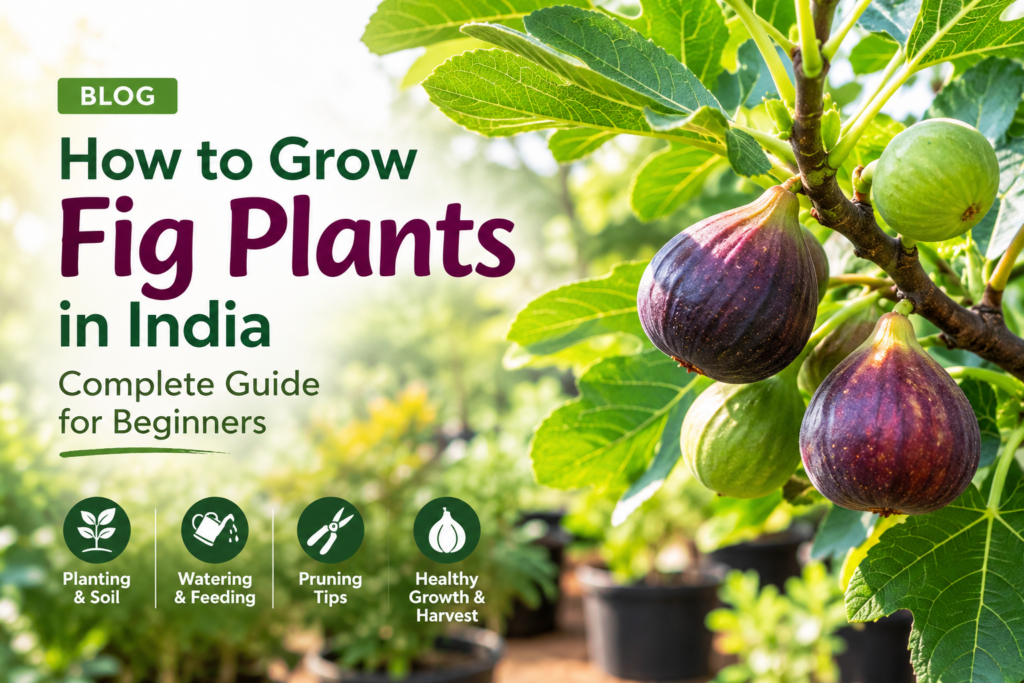
Growing figs at home can be surprisingly rewarding. With the right variety, good sunlight, well-draining soil, proper watering, and regular pruning, a fig plant can grow successfully in many parts of India.
If you are wondering how to grow fig plants in India, this beginner-friendly guide will explain everything you need to know—from choosing a healthy fig plant to planting, watering, pruning, fertilizing, and encouraging fruit production.
At Live Figs, our focus is on helping growers understand fig plants and grow them successfully in Indian conditions.
Why Grow Fig Plants in India?
Fig plants are well suited to warm climates and can be grown in many parts of India. They can be planted in the ground or grown in large containers, making them suitable for home gardens, terraces, balconies, and small farms.
Fresh figs are also highly valued for their taste and nutritional qualities.
With proper fig plant care, a healthy plant can become an attractive fruit-producing tree in your garden.
1. Choose the Right Fig Variety
The first step in growing figs in India is choosing a variety that suits your climate and growing conditions.
Different fig varieties can vary in:
- Fruit size
- Fruit color
- Taste and sweetness
- Growth habit
- Fruiting season
- Climate tolerance
- Container suitability
For beginners, it is generally better to start with a healthy, established plant rather than growing a fig tree from seed.
Tip for beginners
Choose a healthy nursery-grown fig plant with:
- A strong stem
- Healthy green leaves
- Good root development
- No visible pests or diseases
- Active new growth
A healthy starting plant can make the early stages of fig growing much easier.
2. Select the Right Location
One of the most important requirements for a fig plant is sunlight.
How much sunlight does a fig plant need?
Ideally, provide your fig plant with around 6–8 hours of direct sunlight per day.
Good sunlight helps the plant:
- Produce healthy new growth
- Develop stronger branches
- Support fruit development
- Improve fruit sweetness
- Maintain a compact and productive structure
Choose an open location where the plant receives plenty of direct sunlight.
Avoid planting your fig tree in a location that remains shaded for most of the day.
3. Choose the Right Soil for Fig Plants
Good soil drainage is extremely important for successful fig plant care.
Fig plants prefer soil that drains excess water efficiently. Constantly wet soil can create problems with the roots and may affect plant growth.
Best soil for fig plants
A suitable growing medium can contain a combination of:
- Good-quality garden soil
- Well-decomposed organic matter
- Compost
- Coarse sand or another drainage-improving material
The exact mixture can vary depending on your local soil.
The most important principle is:
The soil should retain enough moisture for healthy growth but should never remain waterlogged.
4. How to Plant a Fig Plant
If you are planting your fig plant in the ground, select a sunny location with good drainage.
Dig a planting hole larger than the plant’s existing root ball. Carefully remove the plant from its container without unnecessarily disturbing the roots.
Place the plant in the hole at approximately the same depth at which it was growing in the nursery container.
Fill the hole with suitable soil and gently firm the soil around the roots.
Water thoroughly after planting.
Growing figs in containers
Fig plants can also be grown successfully in containers.
Choose a large container with sufficient drainage holes.
As the plant grows, its root system also develops. Therefore, avoid keeping a vigorous fig plant in a very small pot for a long period.
A larger container also provides greater stability as the plant becomes taller.
5. Fig Plant Watering: How Often Should You Water?
Watering is one of the areas where many beginners make mistakes.
There is no single watering schedule that works for every fig plant.
The required amount of water depends on:
- Temperature
- Rainfall
- Soil type
- Pot size
- Plant size
- Growing location
- Season
Instead of following a fixed schedule, check the moisture level of the soil.
Water thoroughly when the upper layer of soil has started to dry.
Avoid overwatering
More water does not necessarily mean better growth.
Constantly wet soil can reduce air around the roots and may lead to root problems.
During periods of heavy rainfall, you may need to reduce or completely stop additional watering if the soil is already sufficiently wet.
6. Fertilizing Fig Plants
A fig plant requires nutrients for healthy leaves, branches, roots, and fruit production.
Organic compost or well-decomposed organic matter can be incorporated into the growing medium.
A suitable fertilizer program depends on the soil, plant age, growth stage, and growing conditions.
Avoid excessive fertilizer application.
Too much nitrogen, for example, can encourage vigorous leafy growth without necessarily improving fruit production.
For home growers, a balanced approach is usually better than continuously applying large amounts of fertilizer.
7. Pruning Fig Plants
Pruning is an important part of fig plant care.
Regular and purposeful pruning can help maintain the shape and size of the plant and encourage a productive framework of branches.
Why prune a fig plant?
Pruning can help:
- Control plant size
- Remove weak or damaged branches
- Improve air circulation
- Allow more sunlight into the canopy
- Encourage new productive growth
- Make harvesting easier
Avoid heavy pruning without understanding the growth and fruiting habit of your particular fig variety.
For young plants, focus on developing a strong structure rather than removing large amounts of healthy growth.
8. Why Is My Fig Plant Not Producing Fruit?
One of the most common questions from new fig growers is:
“Why is my fig plant not producing fruits?”
There can be several reasons.
Common causes include:
1. Insufficient sunlight
A fig plant needs plenty of direct sunlight for strong growth and fruit production.
2. Young plant
Some plants simply need time to establish themselves before producing a significant crop.
3. Excessive nitrogen
Too much nitrogen can encourage leaves and shoots rather than balanced fruit production.
4. Incorrect watering
Both excessive watering and prolonged drought can stress the plant.
5. Excessive pruning
Removing too much productive growth can reduce fruiting potential.
6. Unsuitable variety or local conditions
Different fig varieties can behave differently depending on climate and growing conditions.
7. Poor root conditions
Compacted or constantly wet soil can affect overall plant health.
Before making major changes, observe the plant’s overall health and growing conditions.
9. Fig Plant Care During the Indian Summer
Many parts of India experience hot weather, particularly during the summer months.
During hot and dry periods:
- Monitor soil moisture regularly.
- Water when the plant actually needs it.
- Maintain good soil drainage.
- Protect newly planted young plants from extreme stress.
- Use suitable organic mulch carefully.
Important: Be careful with mulch
Mulching can help reduce moisture loss, but the mulch should not remain continuously wet or be piled directly against the main stem.
Good drainage remains essential.
10. Fig Plants During the Monsoon
The monsoon presents a different challenge.
During periods of heavy rainfall, excessive moisture can become a bigger problem than lack of water.
If your fig plant is growing in a pot, make sure the drainage holes are open and unobstructed.
For plants growing in the ground, avoid locations where rainwater collects.
A simple rule is:
Fig plants like moisture, but they do not like waterlogged roots.
11. Common Fig Plant Growing Mistakes
If you are a beginner, try to avoid these common mistakes:
❌ Overwatering
Don’t water simply because it is part of your daily routine. Check the soil first.
❌ Poor drainage
A beautiful soil mixture will not help if excess water cannot escape.
❌ Too little sunlight
Keeping a fig plant in deep shade can result in weak growth and poor fruiting.
❌ Excessive fertilizer
More fertilizer does not automatically mean more figs.
❌ Heavy pruning
Aggressive pruning can remove healthy productive branches.
❌ Choosing the wrong plant
Starting with a weak or unhealthy nursery plant can create unnecessary problems.
12. Can You Grow Figs in Pots?
Yes. Growing fig plants in pots is a practical option for people who have limited garden space.
Container-grown figs are suitable for:
- Terraces
- Balconies
- Courtyards
- Small gardens
- Urban homes
However, container plants require closer attention to watering, nutrition, root space, and drainage.
Choose a sufficiently large container and ensure that excess water can drain freely.
13. How Long Does a Fig Plant Take to Produce Fruit?
The time required to produce fruit depends on several factors, including:
- Variety
- Plant age
- Propagation method
- Growing conditions
- Sunlight
- Nutrition
- Pruning
- Overall plant health
A healthy established nursery plant may fruit sooner than a plant grown from seed.
Do not judge a fig plant only by its age. The plant’s health and growing conditions are equally important.
14. How to Get Better Fig Fruit Production
If your goal is to harvest good-quality figs, focus on the fundamentals.
Give your plant:
☀️ Plenty of sunlight
Aim for a location with good direct sunlight.
💧 Correct watering
Water deeply when required rather than keeping the soil continuously wet.
🌱 Healthy soil
Use a well-draining growing medium with adequate organic matter.
✂️ Proper pruning
Maintain a manageable structure and remove weak or damaged growth.
🍃 Balanced nutrition
Provide nutrients according to the plant’s needs rather than over-fertilizing.
🌿 Good plant health
Regularly inspect your fig plant for pests, diseases, and signs of stress.
Frequently Asked Questions About Growing Fig Plants in India
Can fig plants grow in India?
Yes. Fig plants can be grown in many parts of India when the variety and growing conditions are suitable.
How much sunlight does a fig plant need?
Around 6–8 hours of direct sunlight is generally a good target for healthy growth and fruit production.
How often should I water my fig plant?
There is no fixed schedule. Check the soil moisture and water when the growing medium has started to dry. Avoid keeping the soil continuously waterlogged.
Can I grow a fig plant in a pot?
Yes. Fig plants can be grown successfully in sufficiently large containers with good drainage.
What is the best soil for fig plants?
A well-draining soil mixture containing suitable garden soil and organic matter is a good starting point. The key is avoiding prolonged waterlogging.
Why is my fig plant growing leaves but not producing fruit?
Possible reasons include insufficient sunlight, excessive nitrogen, young plant age, unsuitable growing conditions, incorrect watering, excessive pruning, or variety-specific characteristics.
Can I grow figs at home?
Yes. With adequate sunlight, suitable soil, proper watering, and enough growing space, figs can be grown at home in both containers and the ground.
Final Thoughts
Learning how to grow fig plants in India does not have to be complicated.
Start with a healthy plant, choose a sunny location, provide well-draining soil, water according to the plant’s needs, maintain balanced nutrition, and prune thoughtfully.
Most importantly, observe your plant.
Every garden has different soil, temperature, rainfall, humidity, and growing conditions. Successful fig plant care comes from understanding these conditions rather than following a fixed routine.
At Live Figs, our goal is to help fig lovers grow healthier plants and enjoy the experience of growing different fig varieties at home.
Start with the right plant. Give it the right conditions. Be patient—and let your fig plant grow.